
Healthy Office Snacks to Beat the Fall Energy Slump
The clocks fall back on Sunday, November 1, and by Monday your team is walking out of the office after dark. It’s 2:45 p.m., the sky is already gray, and someone is eyeing the candy dish for the third time today. If that sounds familiar, you’re not imagining it. Seattle-area offices hit the same wall every fall: shorter days, steady rain, and energy that drops right when year-end deadlines pile up.
Here’s the good news. A few small changes to what’s in your break room can help. Stocking healthy office snacks won’t fix a gray November on its own, but it’s one of the easiest, lowest-cost ways to help your team feel steadier and sharper through the darker months.
This guide covers why the fall slump hits so hard, what makes a snack truly “healthy” for workday energy, which snacks work best in fall and winter, and how to build a snack program your team will actually use.
Why the Fall Slump Hits Seattle Offices So Hard

Most people notice the shift in October. By December, sunset in Seattle arrives before 4:30 p.m., and the winter solstice brings just over eight hours of daylight. Add the rain (the wet season runs roughly October through April) and many people are commuting to work in the dark and heading home in the dark, too.
That changes how people feel at work. Less daylight can mean lower energy, a foggier afternoon, and stronger cravings for quick carbs and sugar. Those cravings make sense. A sugary snack gives the brain a fast burst of fuel. But the burst fades quickly, and the crash that follows can leave someone more tired than before. Add an extra coffee to push through, and the afternoon turns into a cycle of spikes and dips.
A quick note: some people deal with seasonal affective disorder (SAD), a form of depression linked to the changing seasons. Snacks don’t treat it. If someone on your team is struggling with a low mood that doesn’t lift, point them to your Employee Assistance Program or their doctor. What an office can do is make the everyday environment a little easier on everyone, and food is one of the simplest places to start.
What Makes a Snack “Healthy” for Workday Energy
“Healthy” can mean a lot of things. For an office, a good rule of thumb is simple: choose snacks that give steady energy instead of a quick spike.
Look for Fiber
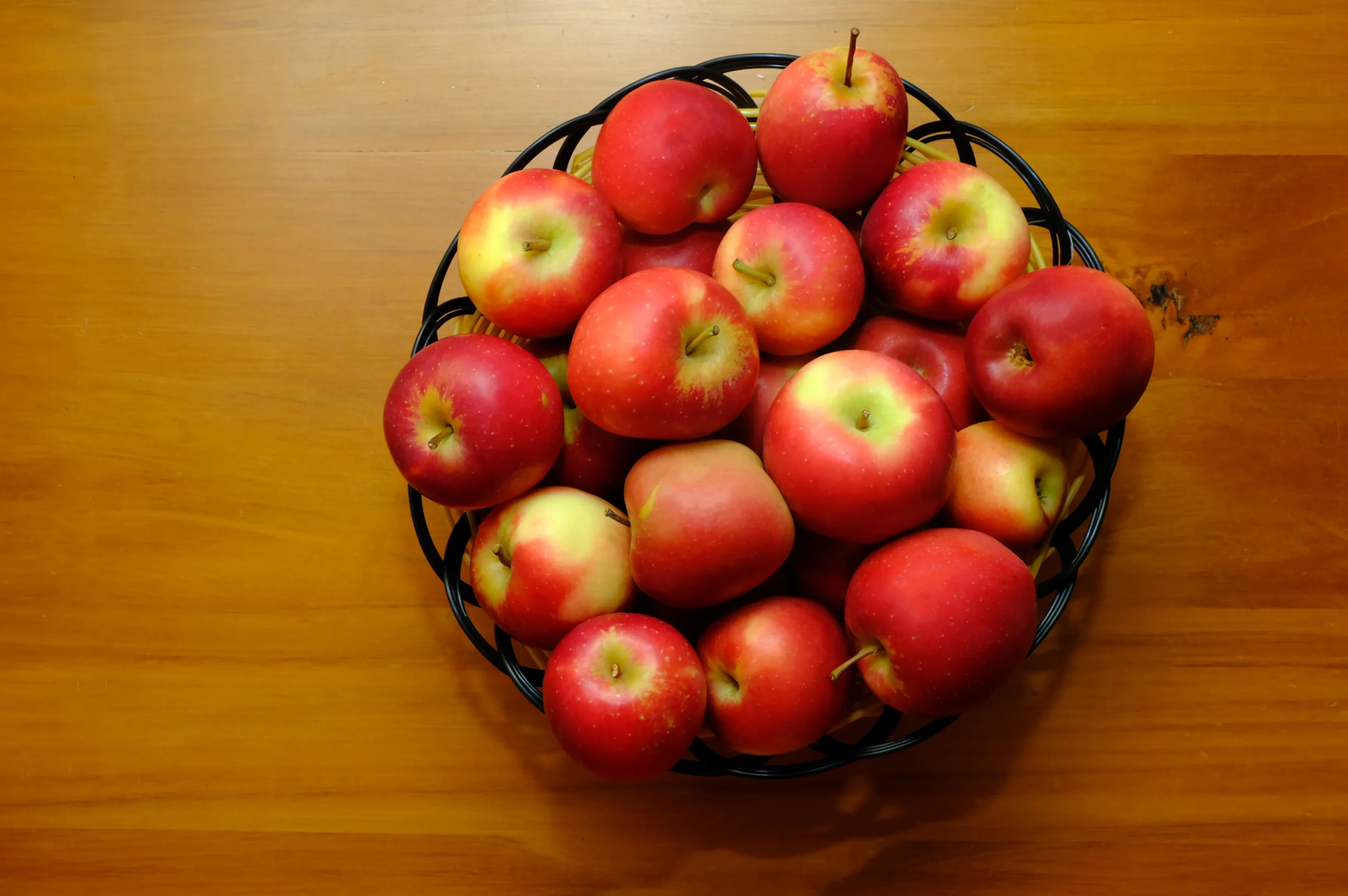
Fiber slows digestion, which helps energy last longer. Whole fruit, nuts, seeds, and whole-grain snacks are all good sources. An apple with the skin on is a classic example. It’s crunchy, filling, and needs no preparation.
Add Some Protein or Healthy Fat
Protein and healthy fats help people feel full. Nuts, seeds, and protein bars do this well. A small handful of almonds next to a piece of fruit can carry someone from 2 p.m. to the end of the workday without a trip to the vending machine.
Be Careful With Sugar-Only Snacks
Candy, sugary drinks, and many pastries give a quick lift and a quick drop. They’re fine once in a while, but they shouldn’t be the default in your break room. Fruit contains natural sugar too, but it comes packaged with fiber and water, so the energy tends to be steadier.
Here’s a simple test for your break room: if the most convenient snack is also the sugariest one, change what’s convenient.
The Best Healthy Office Snacks for Fall and Winter
Seasonal food tastes better and keeps the snack bowl interesting. Here’s what to look for from October through February.
Fall Fruit: Apples and Pears
Washington grows more apples than any other state, so fall is prime time. Crisp apples are sturdy, easy to grab, and hold up well in an office bowl all week. Look for popular varieties like Honeycrisp and Gala, plus Cosmic Crisp, an apple developed at Washington State University. Pears are another fall favorite. Bartlett and Anjou are sweet, juicy, and easy to eat at a desk.
Winter Citrus: Mandarins and Oranges
Citrus season starts in late fall and runs through winter. Mandarins and clementines are especially popular in offices because they’re easy to peel, easy to share, and don’t need a knife or a plate. The bright smell alone can wake up a quiet afternoon.
Grab-and-Go Extras
Fresh fruit works best as the main event, with a few shelf-stable extras to round it out:
- Nuts and seeds: almonds, pistachios, and pumpkin seeds add protein and crunch
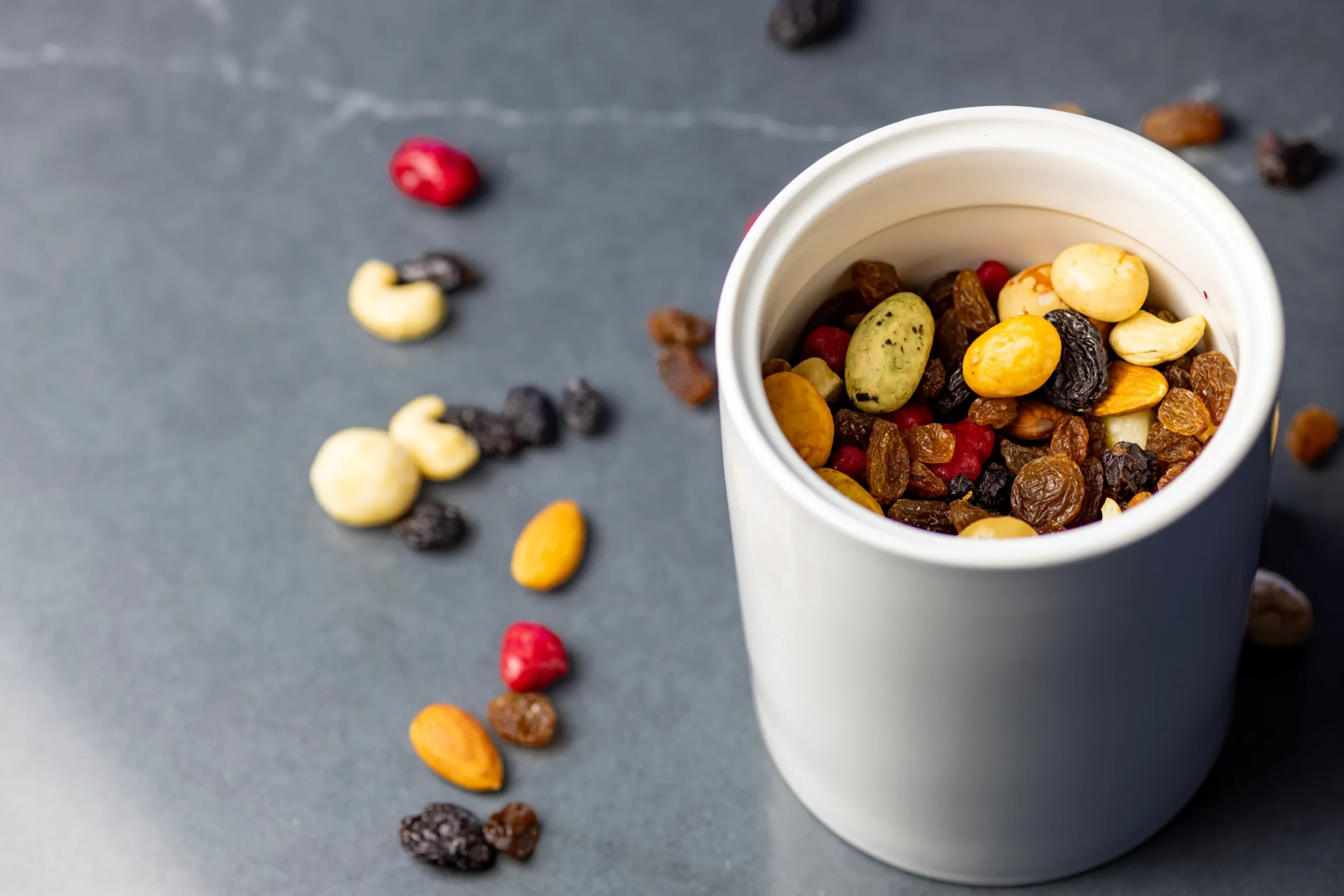
- Trail mix: a mix of nuts and dried fruit travels well and satisfies a sweet craving
- Dried fruit: look for options with no added sugar
- Protein or granola bars: read the labels, since some bars are closer to candy than food
- Whole-grain crackers: a good base for people who want something savory
A Simple Starter Mix
If you’re not sure where to begin, aim for roughly two-thirds fresh fruit and one-third shelf-stable extras. Fruit keeps the program feeling fresh and healthy, and the extras make sure there’s something for people who want a heartier bite. Once you see what disappears first, adjust from there.
Easy Habits That Help Beyond the Snack Bowl
Snacks are one piece of the puzzle. A few other low-cost habits can lift the whole office through the dark months:
- Let in the light. Keep blinds open and move desks closer to windows when you can. Even a gray Seattle sky is brighter than indoor lighting.
- Take meetings outside. A 15-minute walking meeting in a light drizzle is easier than it sounds, and most of us in the Northwest already own a rain jacket.
- Protect the lunch break. Teams that step away from their screens at midday tend to feel better at 3 p.m. than teams that eat at their desks.
- Keep water visible. Tiredness and mild dehydration are easy to confuse. A pitcher or water station in the break room makes the healthy choice the easy one.
- Time big pushes carefully. If you have a say in the calendar, schedule the most demanding work for mornings and save lighter tasks for the afternoon dip.
None of these cost much, and they work best together.
How to Build a Healthy Snack Program People Actually Use
Plenty of offices start with good intentions and end up with a sad, half-empty bowl. A few simple steps make the difference.
- Ask your team. A quick poll in Slack or a sticky note by the fridge tells you what people really want to eat.
- Make fruit the star. It’s the easiest healthy snack to grab and the most visible sign that your office cares.
- Put it where people already gather. A bowl near the coffee machine gets used. A box in a closet doesn’t.
- Label for dietary needs. Mark nut-free, vegan, and gluten-free options so everyone feels included.
- Keep it consistent. A snack program works because it’s there every week. Gaps hurt trust faster than almost anything.
That last point is where many offices struggle. Doing the grocery run yourself means someone’s Monday morning disappears into sorting, hauling, and restocking, and it’s the first task to slide when work gets busy.
A delivery service takes that off your plate. ThirdLeaf NW delivers and stocks your office with fresh seasonal fruit and healthy snacks, with plans starting at $80 per week and no long-term contracts. For a 20-person office, that works out to about $4 per person per week. You can also start with a free trial to see how the first delivery lands with your team before you commit to anything.
Fall Wellness in Seattle and Eastern, WA
Seattle teams in South Lake Union, downtown, Fremont, and Ballard know the gray stretch well. For hybrid companies, a well-stocked break room is also a small reason to make in-office days feel worth the commute. When the weather is wet and the daylight is short, a bowl of crisp apples and fresh mandarins is a small but visible way to say “we’re glad you’re here.”
Eastern Washington winters look different. Cities like Richland, Kennewick, Pasco, and the Yakima Valley are colder and drier than Seattle, but the short days are just as real. The upside is that fall is harvest season across the region’s orchards, so apples and pears are at their freshest right when your team needs a pick-me-up. A fruit program in Eastern, WA is often connected to some of the best produce in the state.
Whether your office is in a downtown high-rise or a warehouse district, the idea is the same: make the healthy choice the easy choice, and keep it steady all season.
If your team could use a steadier fall, ThirdLeaf NW can help. We deliver fresh seasonal fruit and healthy snacks to offices across Seattle and Eastern, WA, with plans starting at $80 per week and no long-term contract. Start with a free trial and see how the first delivery lands with your team.
Frequently asked questions
What are the best healthy office snacks for energy?
Snacks with fiber and some protein or healthy fat tend to give the steadiest energy. Fresh fruit like apples and pears, nuts, seeds, and trail mix are all good choices. Pair a piece of fruit with a handful of nuts for a balanced option.
Do healthy snacks really help with the afternoon slump?
They can help. Sugary snacks tend to cause a quick spike and a crash, while snacks with fiber and protein digest more slowly. Snacks aren’t a cure-all, so sleep, light, movement, and breaks matter too.
How much should I budget for a snack program?
It depends on team size and how much variety you want. ThirdLeaf NW plans start at $80 per week, which works out to roughly $4 per person per week for a 20-person office.
What snacks should I limit in the break room?
Candy, sugary drinks, and heavily processed pastries are best kept as occasional treats rather than the default. You don’t have to ban anything. Just make sure the easiest options to grab are also the healthiest ones.
How do I handle allergies and dietary needs?
Label snacks clearly and keep a few options that work for common needs, such as nut-free, vegan, and gluten-free items. A simple note next to each bowl or basket goes a long way. If you use a delivery service, tell them about any allergies when you set up your plan.
How often should office snacks be restocked?
Weekly is the most common schedule. It keeps fruit fresh and prevents the half-empty bowl problem. Smaller offices sometimes start with a lighter weekly plan and adjust after a few deliveries.