
Office Snack Delivery vs. Vending Machines: Which Wins?
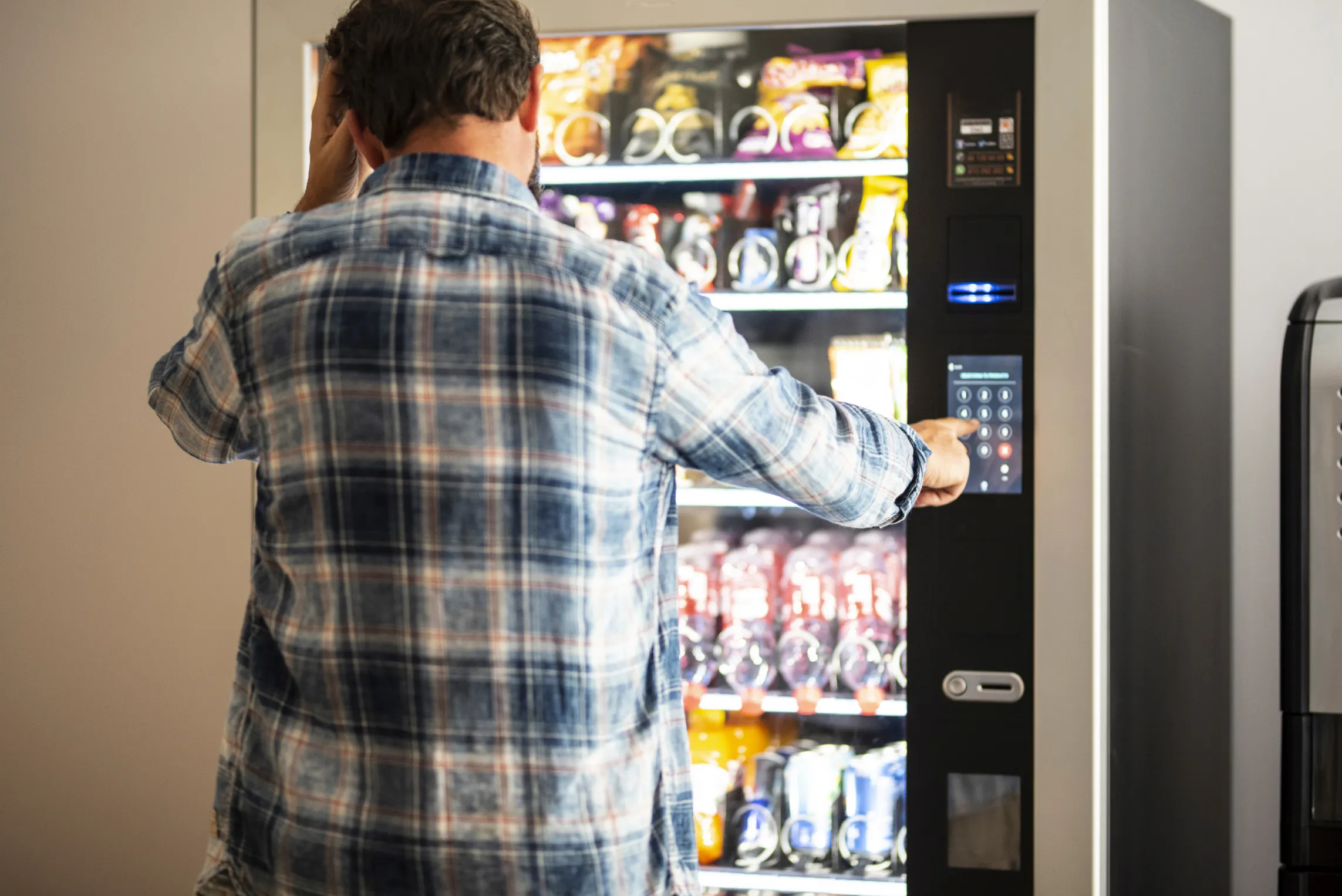
It’s 3 p.m. on a Wednesday. Someone is standing at the vending machine, pressing the same button for the third time. The bag of chips is stuck, the “out of order” sign is nowhere to be found, and a coworker walks by with a shrug. If your office relies on a vending machine, you’ve probably seen this scene.
If you’re an office manager deciding how to stock your break room, you’ve likely landed on two main options: a vending machine or office snack delivery. Both put food within reach of your team, but they work very differently. The right choice depends on cost, freshness, how your team works, and what you want your snack program to say about your company.
This guide breaks down how each option works, how the costs compare, and when each one makes sense, so you can choose with confidence.
How Each Option Works
How Vending Machines Work
A vending company places a machine in your space, stocks it, and services it on a schedule. Many vendors place machines with little or no upfront cost to the employer. Employees pay per item with cash or card, and the vendor earns money from those sales. Some agreements include commissions or minimum sales requirements, so it’s smart to read the terms before you sign.
How Office Snack Delivery Works
With this model, a provider brings fresh fruit and snacks to your workplace on a regular schedule, usually weekly. Your company pays a flat subscription based on team size, and employees help themselves for free. ThirdLeaf NW delivers and stocks your break room with seasonal fruit and healthy snacks, with plans starting at $80 per week and no long-term contracts.
The biggest difference between the two isn’t the food. It’s who pays, and how that feels to your team.
Cost: Who Pays, and How Much?
Cost is where most comparisons start, and it’s worth looking at more than the sticker price.
Vending machines usually cost the employer very little. The trade-off is that employees pay every time they want a snack, at prices set by the vendor. Those prices are often higher than the same item at a grocery store. A machine can also cost you in less obvious ways: downtime when it breaks, staff time spent reporting problems, and the quiet message that snacks are something people buy for themselves.
Snack delivery is a predictable weekly expense. At $80 per week, a full year comes to about $4,160. For a 20-person team, that’s about $4 per person per week. For a 40-person team, it’s about $2. The cost per person drops as your team grows, and the snacks are free for everyone every day.
The most useful way to think about it is this: with vending, employees fund their own snacks. With delivery, the company does. Neither is wrong, but they send very different signals, and they appeal to different budgets and cultures.
If you’re curious about what a plan might cost for your specific headcount, our pricing breakdown walks through it in more detail.
Freshness and Food Quality
Vending machines are built around shelf-stable food: chips, candy, cookies, and bars. Some operators offer “healthier” machines with nuts, dried fruit, and protein bars, and those are a real improvement. But fresh fruit is hard to stock in a machine. It spoils, it needs refrigeration, and it requires frequent restocking to stay appealing.
Snack delivery flips that. Fresh seasonal fruit is the star, and shelf-stable snacks fill in around it. In fall, that means crisp apples and pears. In winter, it’s mandarins and oranges. In summer, think peaches, berries, and plums. The trade-off is that fresh fruit has a shelf life, so a delivery plan works best when it’s sized to your team and arrives on a steady schedule.
What Your Team Reaches For
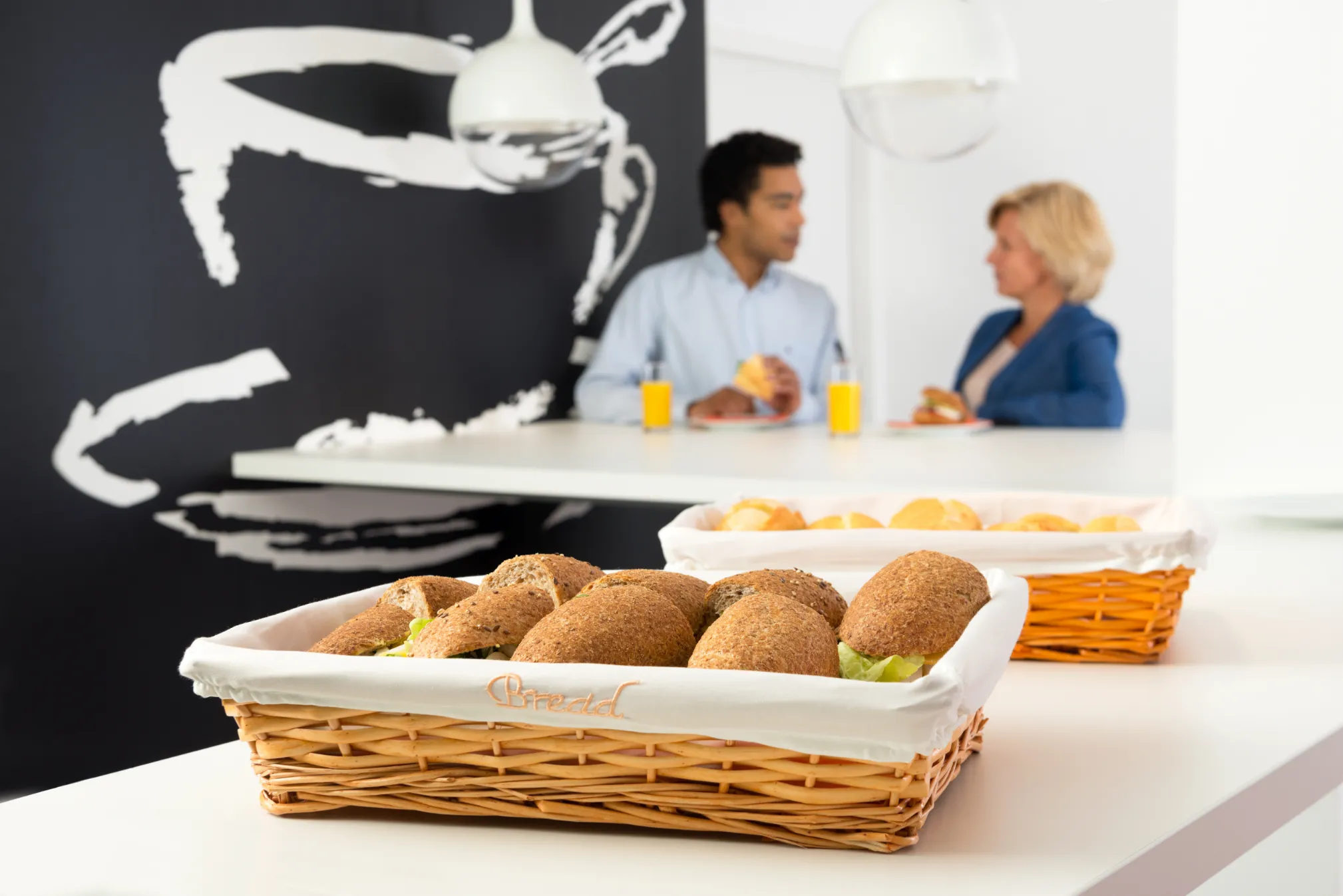
People tend to grab whatever is easiest and closest. When the only option is a machine full of chips and candy, that’s what people eat. When there’s a bowl of fruit on the counter and a basket of nuts next to it, the healthier choice becomes the easy one. That small shift in what’s convenient can change daily habits more than any poster or wellness email.
Convenience, Access, and Upkeep
Both options are convenient in different ways, and each has real strengths.
Where Vending Machines Win
- 24/7 access. A machine is available whenever someone needs a snack, including early mornings, late nights, and weekends.
- No one has to put anything out. The vendor handles stocking and cleaning.
- Works well in shared or public spaces, like lobbies and waiting areas.
Where Snack Delivery Wins
- No payment friction. No cash, no card readers, no stuck bags. People just grab what they want.
- Easy to adjust. You can change the mix, add snack categories, or scale the plan up or down as your team changes.
- Fewer things to break. There’s no machine to jam, run out of change, or sit with an “out of order” sign for a week.
A Note on Upkeep
Delivery does need a little attention. Someone should notice when the bowl is empty or when a snack isn’t getting eaten, and tell the provider so they can adjust. It’s usually a two-minute task, but it helps to name an owner. With a vending machine, upkeep means calling the vendor when something breaks. Both are small jobs, but they’re different jobs.
The Culture Factor: Convenience vs. Perk
A vending machine says, “snacks are available here.” A stocked break room says, “we want you to feel good at work.” Employees notice the difference.
That matters most for companies competing for talent. In Seattle’s job market, small perks are part of how candidates judge a workplace. A full fruit bowl is something a new hire sees on their first office tour and appreciates every week after. A vending machine tends to read as a convenience, not a perk.
None of this means vending is a bad choice. It just means that if your goal is to show your team you care about their day-to-day experience, free, fresh food does that job more directly.
When Vending Machines Still Make Sense
A fair comparison should include the cases where vending is the better fit:
- Shift work or round-the-clock operations. If your team works overnight or at odd hours, a machine is available when no delivery is.
- High-traffic public spaces. Lobbies, waiting rooms, and customer areas often suit vending better than a stocked break room.
- No one available to manage a snack area. If nobody can put out fruit or tidy a counter, a machine is hands-off.
- A culture of employee-paid snacks. If your team prefers buying their own and the company isn’t looking to cover it, vending fits.
- Cold drinks and quick treats. Machines are good at this.
And you don’t have to pick just one. Many offices use snack delivery for fresh fruit and healthy staples, then keep a machine for after-hours, drinks, and the occasional treat. The two can work well together.
Seattle and Eastern, WA Considerations

In Seattle, many offices sit in multi-tenant buildings in South Lake Union, downtown, and other dense neighborhoods. Building rules can affect both options. A vending vendor may need property manager approval for machine placement, and deliveries may need to go through a loading dock, freight elevator, or front desk check-in. It’s worth asking your property manager about the process, whichever option you choose. Hybrid teams also benefit from a small perk that makes an in-office day feel worth the commute.
In Eastern, WA, many workplaces run on early shifts or include plants, warehouses, and job sites. For those teams, a machine can fill gaps that a weekly delivery can’t. At the same time, Eastern Washington’s orchards sit right in the region, so a fruit delivery plan there can mean fresh, seasonal produce from nearby. ThirdLeaf NW delivers to offices in Richland, Kennewick, Pasco, Yakima, and the surrounding area, and many offices pair delivery with a machine to cover every shift.
How to Decide: Five Questions to Ask
If you’re still undecided, work through these five questions:
- Who should pay for snacks? If the company covers them, delivery is the natural fit. If employees pay, vending works.
- What do you want snacks to say? A perk calls for delivery. A convenience calls for vending.
- How important is fresh, healthy food? If fresh fruit matters, delivery is the better choice.
- When do people need access? If your team works around the clock, add a machine or use both.
- Who will manage it? Delivery needs a quick weekly check. Vending needs a vendor contact.
If your answers lean toward company-paid, fresh, and healthy, snack delivery is likely the right call. If they lean toward employee-paid, always-on, and hands-off, a vending machine fits. If your answers are mixed, a combination of both is often the best solution.
If you’re ready to give your team fresh fruit and healthy snacks without managing a machine, ThirdLeaf NW makes it simple. We deliver and stock offices across Seattle and Eastern, WA, with plans starting at $80 per week and no long-term contracts. Start with a free trial and see how it compares in your own break room.
Frequently asked questions
Is office snack delivery more expensive than vending machines?
It depends on who is paying. Vending machines usually cost the employer little, but employees pay for each item. Snack delivery is a flat weekly cost paid by the company, such as plans from $80 per week with ThirdLeaf NW, and the snacks are free for everyone.
Can I use both snack delivery and a vending machine?
Yes. Many offices use delivery for fresh fruit and healthy staples and keep a machine for after-hours, cold drinks, and treats. The two options cover different needs.
Do I need a contract for snack delivery?
It depends on the provider. ThirdLeaf NW offers plans with no long-term contracts, and you can start with a free trial before committing.
Are there healthy vending machine options?
Yes. Some vendors offer healthier machines with nuts, dried fruit, and protein bars. They’re an improvement over standard machines, though fresh fruit is still difficult to stock in a machine because it spoils quickly.
How much space does snack delivery need?
Very little. A counter or table with a bowl and a basket is usually enough, and there’s no machine footprint or power outlet required. Placing it near the coffee area helps it get used.
How do I switch from a vending machine to snack delivery?
Check your vending agreement first, since some include contract terms. If there’s no conflict, you can start a trial delivery alongside the machine and see how your team responds before making a final decision.