
 It’s a gray Tuesday morning in South Lake Union, and half your team is running on cold brew and vending machine chips by 10 a.m. Someone mentions they might leave for a company with “better perks.” You nod, make a note, and get pulled into three meetings before you can Google what that even means anymore.If you’ve found yourself searching “corporate wellness program” trying to figure out what one actually includes — or where to even start — you’re not alone. It’s one of the most-searched HR topics in the country right now, and for good reason: Seattle’s job market is competitive, hybrid work has changed what employees expect from an office, and burnout has become a boardroom-level conversation instead of a quiet complaint.
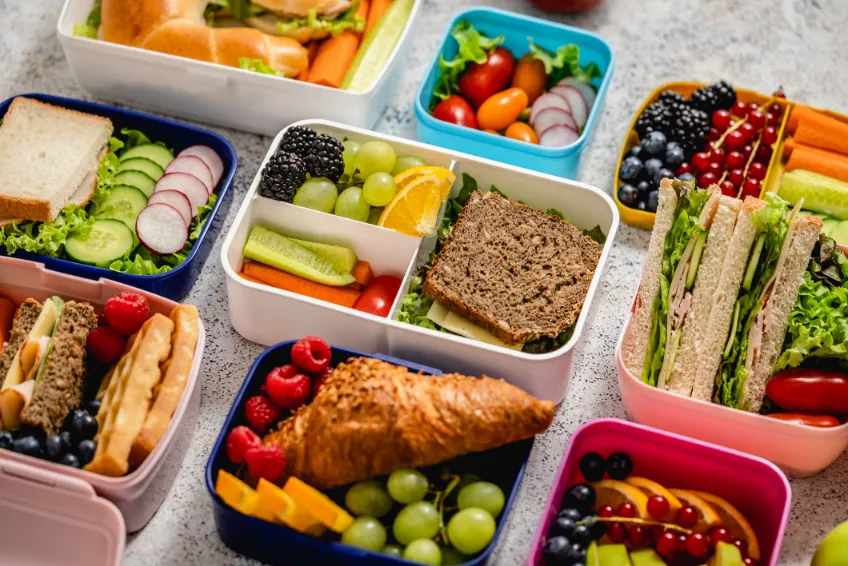
Here’s the good news: you don’t need a six-figure budget or a dedicated wellness department to start. Some of the most effective wellness programs begin with the simplest lever available — what your team eats during the workday.
What Is a Corporate Wellness Program, Exactly?
A corporate wellness program is any structured, ongoing initiative an employer offers to support employees’ physical, mental, and emotional health. That’s a deliberately broad definition, because wellness programs range from a single recurring perk all the way up to full-scale initiatives with dedicated budgets and health coaching.
What separates a real “program” from a random assortment of perks is intentionality and consistency. A ping pong table in the break room isn’t a wellness program. A recurring, budgeted initiative aimed at a specific outcome — better nutrition, fewer sick days, higher retention — is.
Wellness programs typically span a handful of categories, and most companies build toward all of them over time rather than launching everything at once:
- Physical health: healthy food and snack programs, gym stipends, standing desks, on-site fitness classes
- Mental health: Employee Assistance Programs (EAPs), meditation app subscriptions, dedicated mental health days
- Financial wellness: financial planning resources, student loan assistance, retirement plan education
- Social and community: team volunteer days, employee resource groups, informal wellness challenges
- Flexibility: hybrid schedules, flexible start times, compressed workweeks
Of all of these, nutrition is usually the fastest and least complicated to actually put into practice — which is exactly why it’s often where companies start.

Why Food Is the Easiest Place to Start a Wellness Program
Most corporate wellness program ideas fail for the same reason: they ask too much of employees before they see any benefit. Enrollment forms, opt-in fitness challenges, apps nobody downloads. Food doesn’t have that problem.
A well-run office snack and fruit program is:
- Visible immediately. It shows up in the kitchen every week — no announcement required for people to notice it.
- Zero opt-in. Nobody has to sign up, download anything, or remember to use a benefit. It’s just there.
- Felt daily, not annually. Unlike a once-a-year wellness stipend, a good snack program touches the workday every single day.
- Easy to budget. A weekly delivery is a predictable, scalable line item — far simpler to approve than a new benefits category.
This is exactly why office fruit and snack delivery has become one of the most common entry points into corporate wellness programs for small and mid-size companies: it delivers something real, every week, without asking anything of the employees receiving it.
What a Great Office Snack & Fruit Program Actually Looks Like
Not all snack programs are built the same, and the difference shows up fast in whether the office actually uses it. A program worth having usually includes:
- A rotating, seasonal fruit selection rather than the same five items on repeat
- Portion sizing based on real headcount, not a one-size-fits-all box
- Consistent weekly delivery your team can count on, without gaps
- Room to grow into broader snack categories — granola bars, nuts, dried fruit — as the program proves itself
- No long-term lock-in, so you can pilot it before committing
This is the model ThirdLeaf NW runs for offices across Seattle and Eastern, WA: start with a plan sized to your team, keep the variety fresh, and let the program expand only once you know it’s actually working.
Common Mistakes Companies Make When Building a Wellness Program
Even well-intentioned wellness initiatives can fizzle out, and it’s rarely because the perk itself was a bad idea. A few patterns show up again and again:
Launching too many initiatives at once. A company that rolls out a snack program, a fitness stipend, a meditation app, and a mental health survey in the same month usually ends up with mediocre adoption across all four instead of strong adoption in one. Sequencing matters more than volume.
Choosing perks based on what other companies have, not what this team needs. A stipend program looks great on paper, but if half the team is hybrid and rarely in the office, an in-person perk misses them. Asking employees directly — even informally — beats copying a competitor’s benefits page.
Treating it as a one-time announcement instead of an ongoing practice. A wellness initiative introduced with fanfare in an all-hands meeting and never mentioned again tends to fade within a quarter. Programs that stick are the ones built into the actual rhythm of the workweek.
Underestimating visibility. A benefit that technically exists but isn’t seen or felt day-to-day might as well not exist. This is part of why food-based perks tend to outperform less visible benefits — they’re physically present in the space people already spend their day in.

The Wellness ROI of Investing in Better Food at Work
The case for workplace wellness spending isn’t just anecdotal. A widely cited meta-analysis published in Harvard Business Review found that for every dollar companies spent on wellness programs, medical costs fell by roughly $3.27 and absenteeism costs fell by roughly $2.73. Results vary by program design, but the direction has held up across more than a decade of follow-up research: healthier, better-supported employees cost less and show up more.
Nutrition specifically plays an outsized role here. Energy crashes from poor workday eating are a quiet productivity drain — the 3 p.m. slump that turns into a 45-minute vending machine run is more expensive, in lost focus, than most companies realize. A consistent supply of fresh fruit and better snack options is a small, low-cost lever against exactly that problem.
There’s also a hiring-cost angle worth considering. Replacing a mid-level employee typically costs a meaningful multiple of that person’s salary once recruiting, onboarding, and lost productivity are factored in. Even a modest improvement in retention driven by visible, appreciated perks can offset the cost of a wellness program many times over — which is part of why these programs increasingly get framed as an operational investment rather than a discretionary expense.
How Seattle and Eastern, WA Companies Are Building Food-First Wellness Programs
Seattle-area employers are navigating a specific set of pressures that make visible, low-friction wellness perks especially valuable. The tech and biotech sectors concentrated in South Lake Union, Fremont, and the Eastside run on long hours and high-intensity sprints, and a rainy season that runs roughly October through April adds a real seasonal energy dip that many local companies are now actively planning around. A reliable, fresh food program is one of the simplest ways to counteract both.
Companies in Eastern, WA — Richland, Kennewick, Pasco — sit in an interesting position: this is Washington’s actual fruit-growing country, so an office fruit program there often means shorter supply chains and fresher produce than most employees would expect. It’s also a tighter local labor market, where a visible, appreciated perk like this carries real retention weight.
How to Measure Whether Your Wellness Program Is Working
You don’t need a formal analytics dashboard to know if a wellness initiative is landing. A few simple signals are usually enough:
- Participation and usage. Is the fruit bowl empty by Thursday, or still half-full when the next delivery arrives? Usage tells you more than intentions do.
- Informal feedback. A quick Slack poll or a comment in a team meeting often surfaces more honest signal than a formal survey.
- Sick day trends over time. Not a perfect measure, but worth watching over several months alongside other initiatives.
- Retention conversations. If wellness perks come up unprompted in exit interviews or stay interviews, that’s a strong signal the program is registering with employees.
The goal isn’t to over-engineer measurement for a $80-a-week snack program — it’s to have enough signal to know whether to expand it, adjust it, or move budget elsewhere.
Getting Started: Launching a Wellness Program Through Food
If you’re building your first wellness initiative, resist the urge to plan the whole program before launching anything:
- Start with food. It’s the lowest-friction, highest-visibility wellness perk you can launch this month, with no policy changes or manager training required.
- Right-size the plan. Base it on actual headcount, not a guess — you can always adjust after the first few deliveries.
- Make it visible. A bowl on the kitchen counter gets used; a box in a closet doesn’t.
- Watch what happens. Track something simple — informal feedback, what’s actually being eaten — over the first 60-90 days.
- Expand from there. Once the food program is working, it becomes the foundation for adding other wellness perks with employee trust already built in.
A corporate wellness program doesn’t have to start complicated to be effective. For a lot of Seattle and Eastern, WA companies, it starts with something as simple as fresh fruit showing up in the kitchen every week — and grows from there.
If you’re ready to build your wellness program around something your team will actually notice every week, ThirdLeaf NW makes it simple to start with fresh fruit and snack delivery. We work with companies across Seattle and Eastern, WA to build a plan around your headcount and taste — no long-term contract, no enrollment forms. Start with a free trial and see how it lands with your team.
Frequently asked questions
What’s the fastest wellness perk to launch with no HR overhaul?
Recurring office fruit or snack delivery is typically the fastest to launch — there’s no enrollment process, no policy change, and no manager training required. It’s simply set up once and shows up every week.
Do employees actually use food-based wellness perks more than other benefits?
Yes, generally — because there’s no opt-in step. Benefits that require employees to sign up, download an app, or remember to use them tend to see far lower engagement than perks that are simply present in the workplace.
How does a food program fit into a bigger wellness strategy later?
Many companies use a snack or fruit program as the foundation, then layer in additional perks — flexible scheduling, mental health days, stipends — once the first program has built trust and shown results.
Is a fruit-only program enough, or should we start with more snack variety?
Starting with fruit-only is a common and effective entry point. Many companies expand into broader snack categories once they’ve seen how the program is used and what their team responds to.
What makes a wellness program actually stick instead of fading out?
Consistency. Perks that show up reliably every week — rather than once-a-year events — are far more likely to become part of how a team experiences the workplace day to day.
How long should we run a pilot before deciding if a wellness perk is working?
Most companies get a reasonably clear read within 60-90 days — enough time to see genuine usage patterns rather than just initial-launch enthusiasm.